From Live Like Sam’s Parent Corner
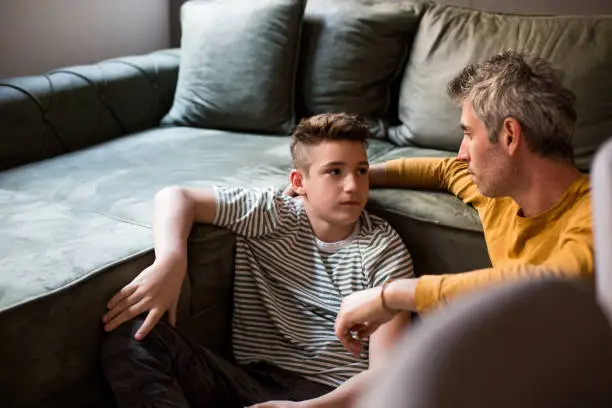
Showing up at home rarely looks the way we expect it to. It is not the big conversation or the perfectly timed intervention. It is the drive home after practice. The kitchen table at 9pm. The question asked without an agenda. The parent who is simply there, not performing presence, just providing it.
You do not need to optimize every interaction. You need to be present for enough of them. The accumulation is the intervention.”
Consistency Is a Developmental Input, Not a Parenting Style
The Search Institute, which has studied positive youth development for decades, identifies consistent relationships with caring adults as one of the most powerful predictors of long-term resilience in young people. Not intensity of engagement. Not quality of advice. Consistency.
What makes this finding significant is what it implies: showing up repeatedly, even unremarkably, accumulates. A parent who is present at dinner most nights, who checks in without interrogating, who notices without immediately reacting – that pattern registers in a young person’s nervous system as safety. And safety is not just an emotional state. It is a neurological condition that determines whether learning, honesty, and growth are even possible.
THE RESEARCH IS CLEAR
Repeated, low-stakes presence builds the foundation for high-stakes conversations.
What this means for parents: You do not need to optimize every interaction. You need to be present for enough of them. The accumulation is the intervention.
Staying calm and available when you feel shut out is not passive. It is one of the most active things a parent can do.“
Why Kids Pull Away and What Keeps the Door Open
Adolescence is developmentally designed to create distance. The individuation process, the psychological work of becoming a separate person, requires teenagers to push against the adults closest to them. This is not dysfunction. It is development.
But research on attachment, particularly work emerging from the field of interpersonal neurobiology developed by Dr. Daniel Siegel at UCLA, shows that teens do not actually want disconnection. They want autonomy within a relationship that remains stable. They are testing whether the relationship can hold while they expand.
Parents who stay present during the pulling-away phase, who do not interpret withdrawal as rejection and disengage in response, are the ones whose teens come back. Not because they said the right things. Because they were still there.
PRESENCE DURING WITHDRAWAL IS THE WORK
Staying calm and available when you feel shut out is not passive. It is one of the most active things a parent can do.
What this means for parents: When a teenager goes quiet, the instinct is often to push for conversation or to give them total space. Neither extreme serves them as well as quiet, consistent availability. Be nearby. Stay warm. Ask one low-stakes question. Let the answer, or the silence, land without pressure.
The events and programs your teen attends are not just activities. They are consistency in community form.”
Community Presence Works the Same Way
What Live Like Sam sees across schools, events, and youth programs in Park City and the Wasatch region reflects the same pattern at a community scale. Students return to spaces and people they have encountered before, not because a single interaction changed them, but because repeated exposure built familiarity, and familiarity built trust.
Live Like Sam FAM, Leading with Kindness, Amplify Youth Voice, these are not one-time interventions. They are consistency in community form.
THIS IS WHAT COMMUNITY DOES
It shows up before it is needed, so it is trusted when it is.
What this means for parents: The events and programs your teen attends are not just activities. They are repeated contact with adults and peers who are committed to showing up. That repetition is doing more than you may realize.
Key Takeaways | The Cheat Sheet
If you read nothing else, read this.
- Consistency is the input. Repeated, low-stakes presence builds the neurological conditions for trust, honesty, and resilience in young people.
- Withdrawal is not rejection. When teens pull away it is developmental, not personal. Staying calmly available is the right response.
- You do not need to be perfect. You need to be there. The accumulation of ordinary moments matters more than any single conversation.
- Community reinforces what you do at home. Every program, event, and connection your teen has with a trusted adult compounds the effect of your presence.
Bottom Line
You do not need to be perfect. You need to be there.